








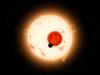
Kepler Discovers a World Orbiting Two Stars
A world with a double sunset that was first imagined in Star Wars over 30 years ago in a galaxy far, far away has become scientific reality.

A world with a double sunset that was first imagined in Star Wars over 30 years ago in a galaxy far, far away has become scientific reality.

NASA’s Kepler spacecraft has spotted a planet that alternately runs late and early in its orbit because a second, “invisible” world is tugging on it.

Astronomers have discovered the darkest known exoplanet – a distant, Jupiter-sized gas giant known as TrES-2b.
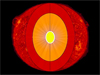
University of Sydney astrophysicists are behind a major breakthrough in the study of the senior citizens of our galaxy: stars known as Red Giants.

Scientists using NASA’s Kepler, a space telescope, recently discovered six planets made of a mix of rock and gases orbiting a single sun-like star, known as Kepler-11, which is located approximately 2,000 light years from Earth.
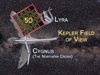
Is our Milky Way galaxy home to other planets the size of Earth? Are Earth-sized planets common or rare? NASA scientists seeking answers to those questions recently revealed their discovery.
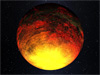
Kepler confirmed the discovery of its first rocky planet, named Kepler-10b. Measuring 1.4 times the size of Earth, it is the smallest planet ever discovered outside our solar system.
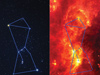
SOFIA, NASA’s Stratospheric Observatory for Infrared Astronomy, soared into the overnight skies on its first science flight Nov. 30, focusing on the Orion nebula and the Sharpless 140 star cluster.
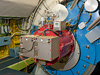
The SOFIA flying observatory underwent several nights of telescope system checkout activities in mid-October in preparation for upcoming early astronomical science flights.

NASA’s SOFIA flying observatory is scheduled to undergo tests of its entire integrated observatory system with the Faint Object InfraRed Camera mounted on its telescope in October.

